



HR365 - Human Resources Management Solution
TimeSheet 365 - Time recording Solution
FixIT 365 - IT Help Desk
LegalCase 365 - Legal Case Management Solution

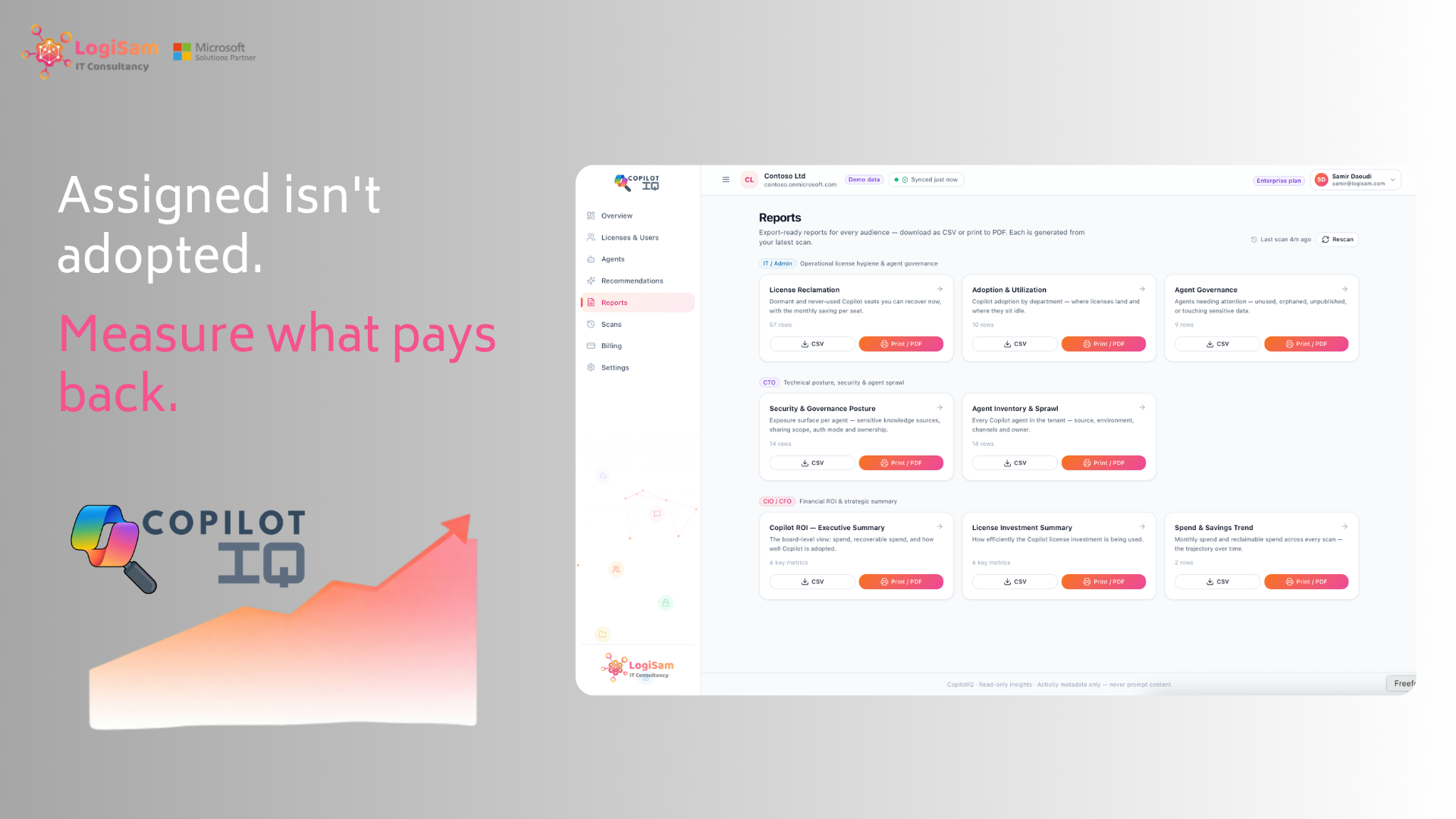
Assigned ≠ Adopted: The Copilot Metric That Actually Predicts ROI

Licences assigned is a vanity metric. CopilotIQ measures real adoption — active users across every Copilot surface, tracked over time — so you can prove value and target enablement where it actually moves the needle.

When a leadership team asks “how’s the Copilot rollout going?”, the reflex answer is the number of licences assigned.

It’s a comforting number because it’s easy to produce and it always goes up.

It’s also the wrong number, because assigning a seat is an IT action — and only adoption, a human action, produces a return on the investment.


The gap between the two is where most Copilot programmes quietly underperform.

A licence can be assigned for months while the person it belongs to has never opened Copilot in Word, never used it in Teams, never let it draft an email.

On a seats-assigned chart, that looks like success.

In reality, it’s cost without value.

Measure the thing that matters

CopilotIQ shifts the headline metric from provisioning to usage. Using last-activity metadata only — never content — it measures how many of your licensed users are actually active across Copilot surfaces, and turns it into the numbers a programme can be steered by:

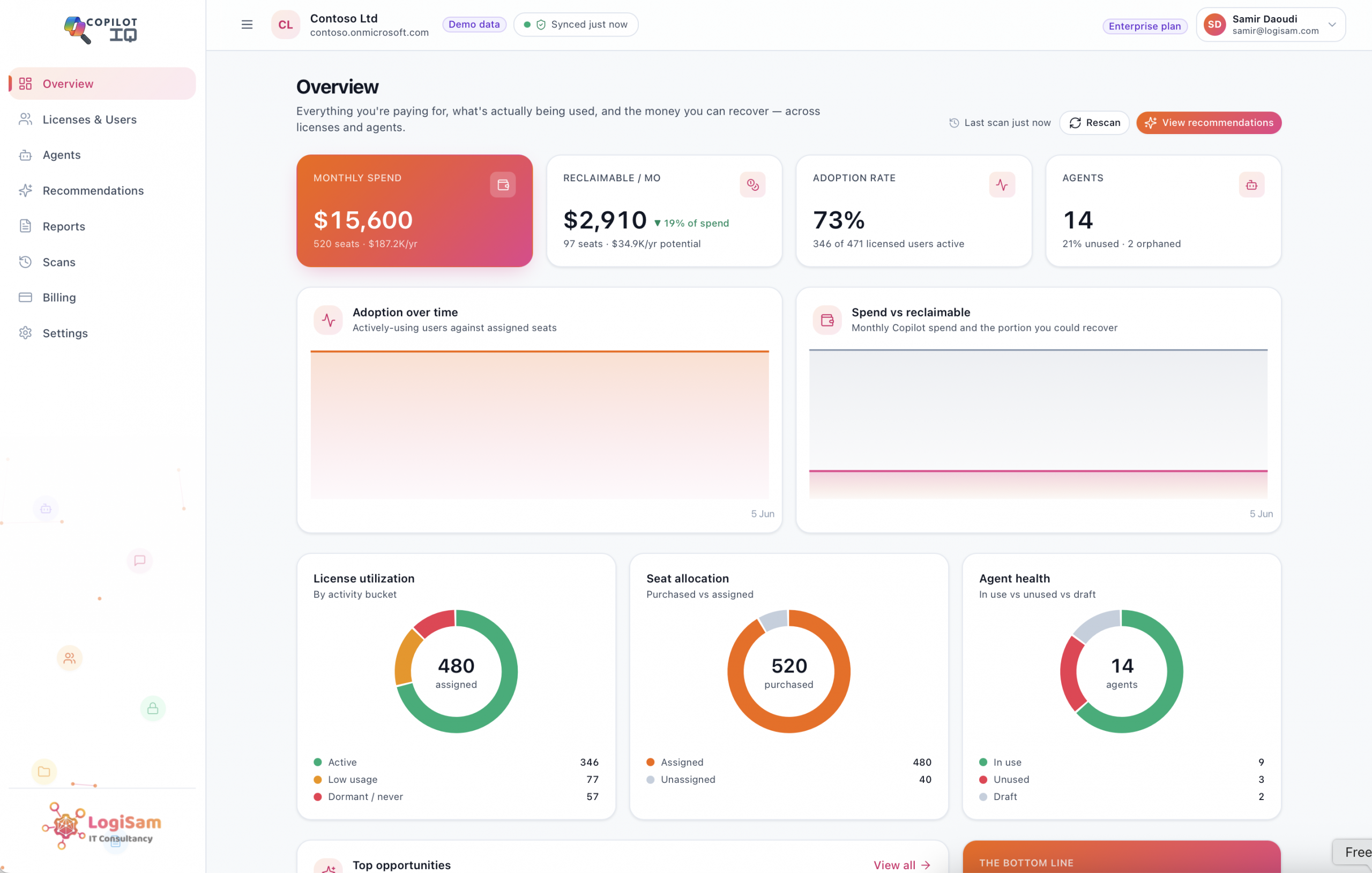
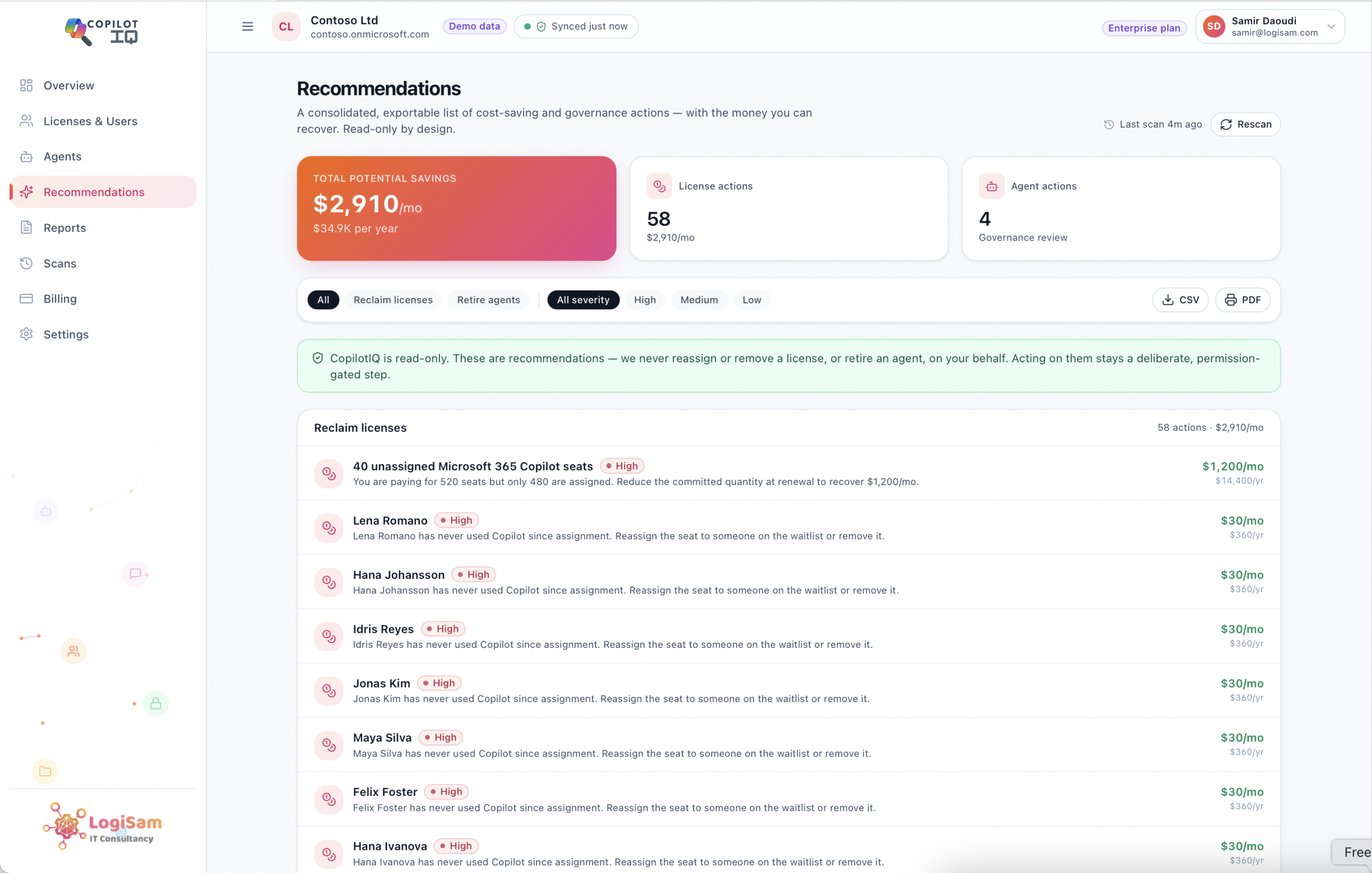
  • Adoption rate — active users as a share of enabled licensed users — becomes your top-line KPI, and because every scan is snapshotted, you can watch it move over time instead of guessing.
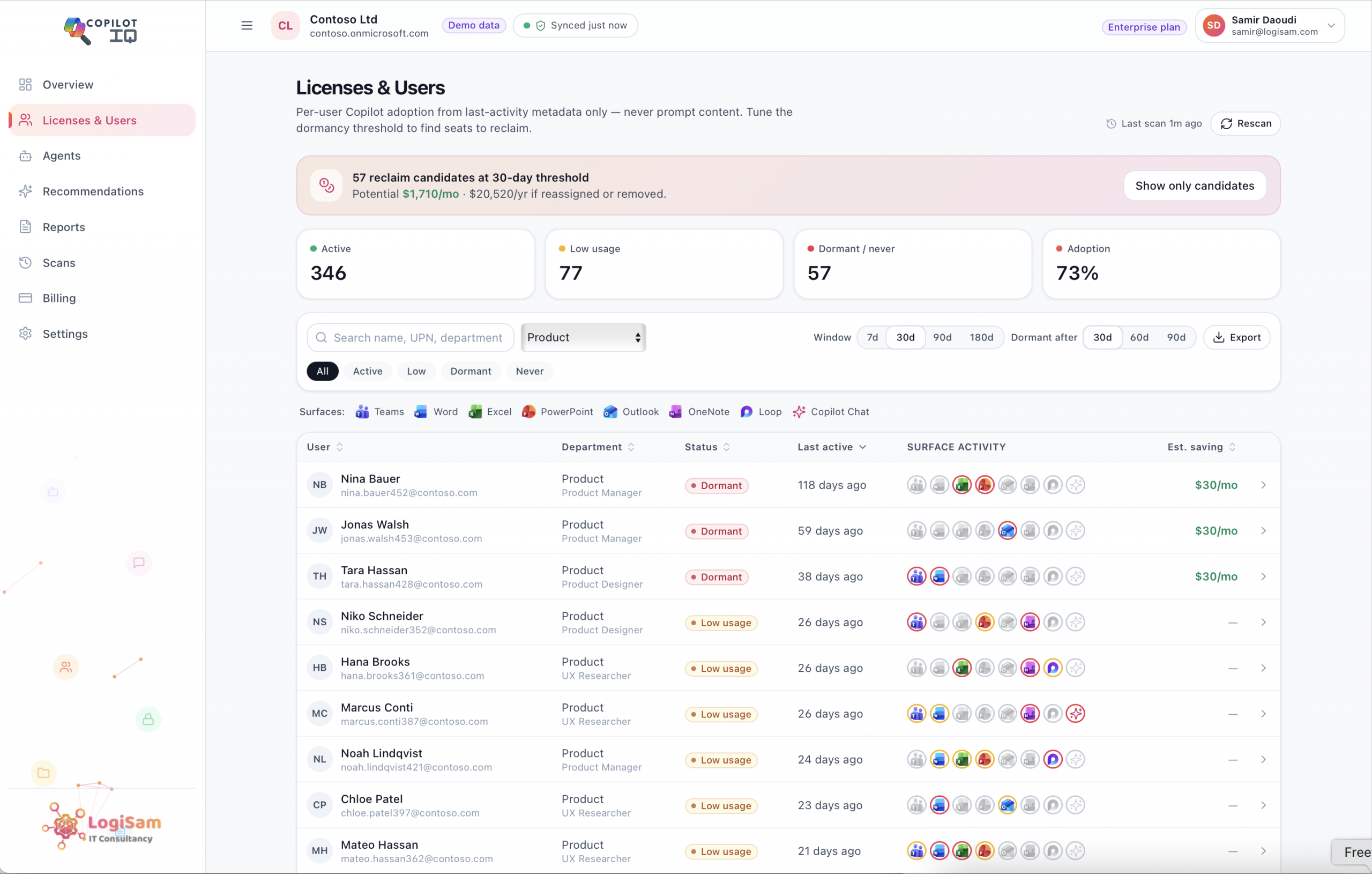
  • Per-surface activity — Teams, Word, Excel, PowerPoint, Outlook, OneNote, Loop and Copilot chat — shows where Copilot is landing and where it isn’t, so enablement effort targets the surfaces and teams that need it.
  • Cost per active user reframes the entire spend conversation around value delivered rather than seats provisioned — a far more honest figure to take into a budget review.

Turn dormant users into active ones

The real power of an adoption view isn’t the scoreboard; it’s the roadmap. When you can see exactly which departments are thriving and which have stalled — and on which surfaces — you can run targeted enablement instead of generic, organisation-wide training that mostly reaches the people who already get it. CopilotIQ even pairs the adoption picture with reclaim recommendations, so the seats that stay dormant despite enablement become candidates to reassign to people on the waitlist who’ll actually use them.

That’s the virtuous loop: measure adoption, target enablement, re-measure, and reallocate the seats that won’t move. Each cycle pushes more of your spend into the “active” column.

From hoping to knowing

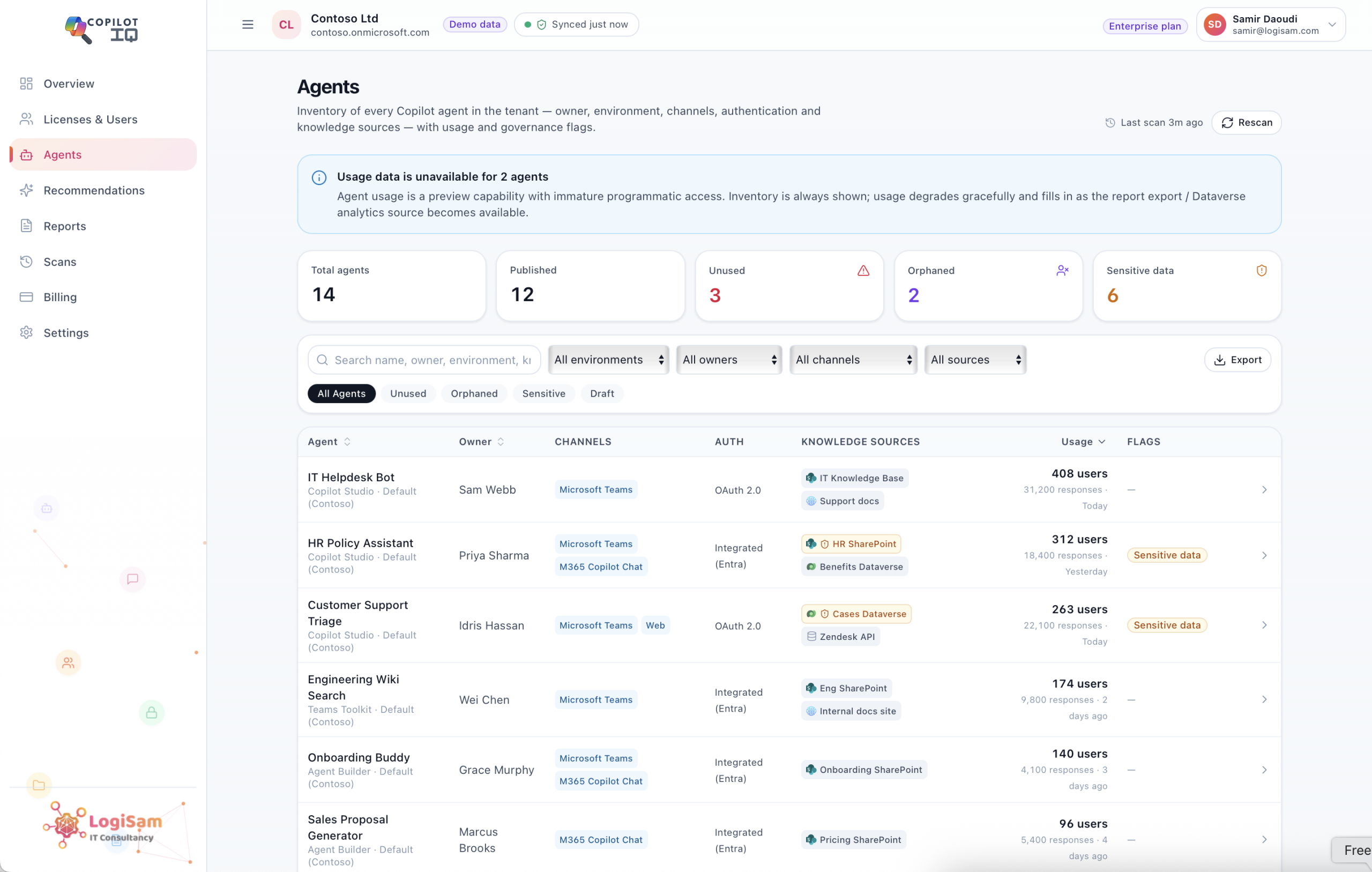
Buying Copilot is a procurement decision. Adopting it is a change-management one — and change management runs on evidence. With CopilotIQ you stop reporting how many seats you’ve handed out and start reporting how many are creating value, where, and which way the trend is heading. That’s the difference between hoping Copilot is working and being able to prove it.

You might also like

The Copilot Report Your CFO Actually Wants

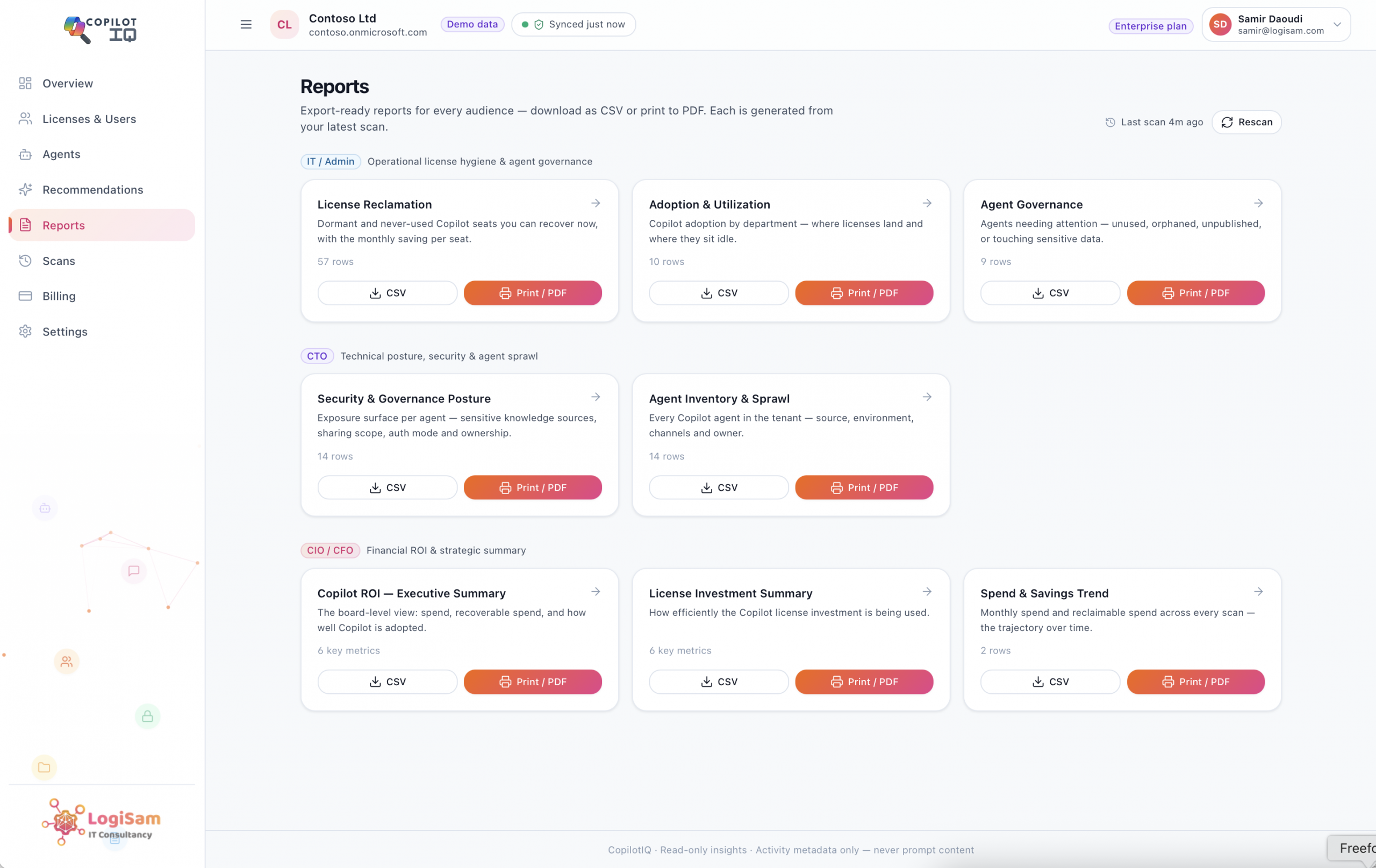
Finance wants one page: spend, value, and what’s recoverable. CopilotIQ generates board-ready CIO, CTO and IT reports from every scan — exportable to CSV/PDF, with trends over time — so renewal conversations run on numbers, not assumptions.

Stop paying for idle Copilot seats.

Idle Copilot seats quietly drain budget every month. CopilotIQ classifies every licence as active, dormant or never-used — and shows your reclaimable spend per month and per year, with a per-user list you can act on.